

Microbiology Lab
Cultivator Phyto Lab aims to serve many food and related industries across India, with its world-class microbiological setup. Our team of experts consisting of postgraduates, scholars, researchers, and doctorates in the field of microbiology together form a strong core microbiological team. The microbiological laboratory deals with the isolation and identification of common indicator organisms and foodborne pathogens in a variety of food matrices, ensuring the quality of raw materials and finished products thereby assuring the safety and quality of the final food product.
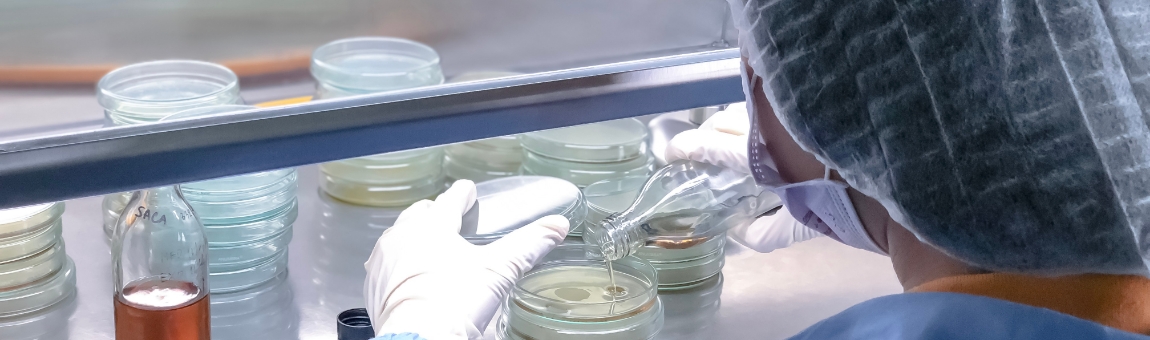
Our laboratory is supported by a well-equipped facility which includes updated equipment as listed below:
Test Parameters
|
Total Plate Count |
Total Yeast and Mould Count |
|
Coliform Count |
E. coli |
|
Heat Resistant Mould |
Staphylococcus aureus |
|
Sulphite Reducing Bacteria |
Salmonella |
|
Vibrio cholerae |
Vibrio parahaemolyticus |
|
Listeria monocytogenes |
Shigella |
|
Bacillus cereus |
Faecal streptococci |
|
Pseudomonas aeruginosa |
Enterobacteriaceae |
|
Bile Tolerant Gram-Negative Bacteria Flat sour organisms |
Clostridium perfringens |
NEWS AND BLOGS
Find up to date information, news releases, and corporate publications for Cultivator Phyto Lab customers

Once upon a time vitamin C biosynthesis was in primates
The biosynthesis of vitamin C, also known as ascorbic acid, formerly allowed primate and human bodies to exist. This biosynthetic process was functional in early primates and many other mammals, enabling them to produce vitamin C on their own. However, during the...
How Culture and Climate Influence Food Habits Evolution
Food habits and their evolution are heavily influenced by culture, food, and climate. They are related to one another. As a result, geospatial climate, or local weather, is one of the key determinants of what people eat, culinary practices and food culture, and even...
Ricin is a potent toxin for health
Ricin is a very poisonous protein found in the castor bean plant's seeds (Ricinus communis). It is one of the most dangerous naturally occurring poisons known to humans. Ricin is a glycoprotein, which means it has carbohydrate (sugar) molecules attached to it. The...